


Why We Teach Latin in Elementary School
At Canterbury School in Los Altos, Latin is a core part of our classical Christian education. Latin strengthens English grammar, builds academic discipline, and trains students to think carefully and express themselves clearly. In the Grammar School years, we use Latin to form strong readers, writers, and lifelong learners.
If you’re exploring private school options in Los Altos, Mountain View, Palo Alto, or Cupertino, we invite you to visit Canterbury and see Latin instruction in action.
What Makes Canterbury’s Latin Program Distinct
Latin at Canterbury is systematic, memorable, and mastery-based.
Students learn Latin as a complete grammatical system—through daily instruction, recitation, and application. This approach builds:
- Strong English grammar and writing skills
- Academic confidence through memorization and mastery
- Attention to detail and logical thinking
- Vocabulary development through Latin roots
- A foundation for advanced studies in the classical tradition
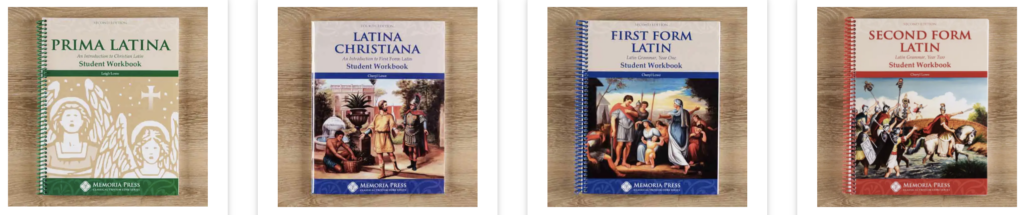
What Students Master in Latin (First–Third Form)
By the end of Third Form, Canterbury students have internalized a significant body of Latin grammar. This includes:
Verbs: A Complete System
Students learn verb endings, tense formation, and meaning across:
- Active and Passive voice
- Six tenses: present, imperfect, future, perfect, pluperfect, future perfect
- Subjunctive mood (the “may/might” verb forms that prepare students for advanced reading)
Students also learn how verbs mean in English (for example: “I love,” “I was loving,” “I will have loved,” “I am loved,” “I may be loved,” etc.).
Nouns: The Five Declensions & Six Cases
Students memorize noun endings across all five declensions and learn the function of the cases:
- Nominative (subject)
- Genitive (possession)
- Dative (indirect object)
- Accusative (direct object)
- Ablative (many functions—often “by/with/from/in”)
- Vocative (direct address)
Adjectives, Pronouns, and More
Students learn:
- Numbers (cardinals and ordinals)
- Adjective agreement and comparison (positive, comparative, superlative)
- Common pronouns (personal, demonstrative, intensive, reflexive)
- Prepositions and how they govern cases
Why Latin Matters for Admissions and Academics
Parents often ask: “Will Latin help my child in real life?”
Yes, because Latin is not only about Latin. It is about language mastery. Latin strengthens skills your child will use every day:
Latin Strengthens English
Latin gives students a clear understanding of grammar and sentence structure. It also builds vocabulary through roots and word families that appear throughout English.
Latin Trains Memory and Attention
In a world full of distraction, Latin teaches students to focus, memorize, and build knowledge that stays with them. This supports success in every subject.
Latin Develops Logical Thinking
Latin requires precision. Word endings and sentence structure matter. Students learn to read carefully, reason clearly, and communicate with accuracy.
Latin Connects Students to the Classical Tradition
Latin is one of the key languages of Western civilization and Christian learning. It supports Canterbury’s broader mission of forming students in wisdom, virtue, and lasting academic excellence.
Is Latin Too Hard for Elementary Students?
Not at Canterbury.
Latin becomes accessible when it is taught step by step, daily, and with consistent recitation. Students gain confidence as they realize they can master real academic content.
For many children—especially in the Grammar School years—Latin is a joy because it is orderly, predictable, and rewarding.
Frequently Asked Questions About Latin
1. Does Latin help with English?
Yes. Latin is essential. strengthens grammar, sentence structure, and vocabulary development. Rev. Macias, our Headmaster, often tells parents: a student does not fully understand English until he has studied Latin.
2. Do Canterbury students speak Latin?
Our focus in the early years is grammar mastery—learning forms, endings, and how the language works. This prepares students to also read, recite, and pray in Latin.
3. Is Latin required?
Yes, Latin is a core part of Canterbury’s curriculum in the Grammar School years because it supports the goals of classical education.
4. Why not start with Spanish instead?
Modern languages are valuable, but Latin gives students a foundation that benefits all future language study—including Spanish, French, and more.